Bioplastic Macrocystis pyrifera Forest
Bioplastic Macrocystis pyrifera Forest
Ecocentro, Puerto Madryn, Patagonia, Argentina | 2022–2023
Circular Art: Designing Beyond the Exhibition
Can a permanent artwork be designed with its eventual end of life in mind?
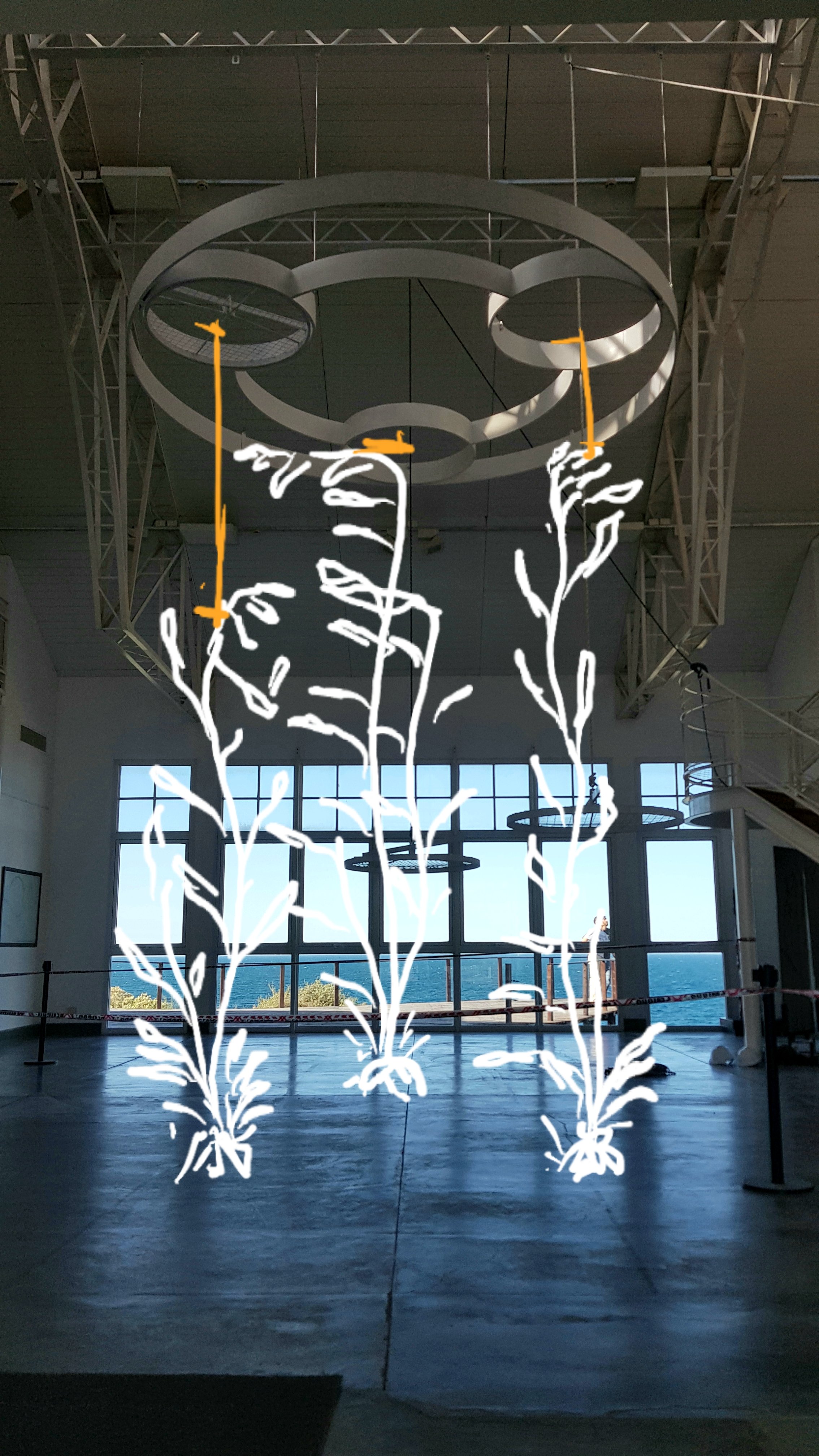
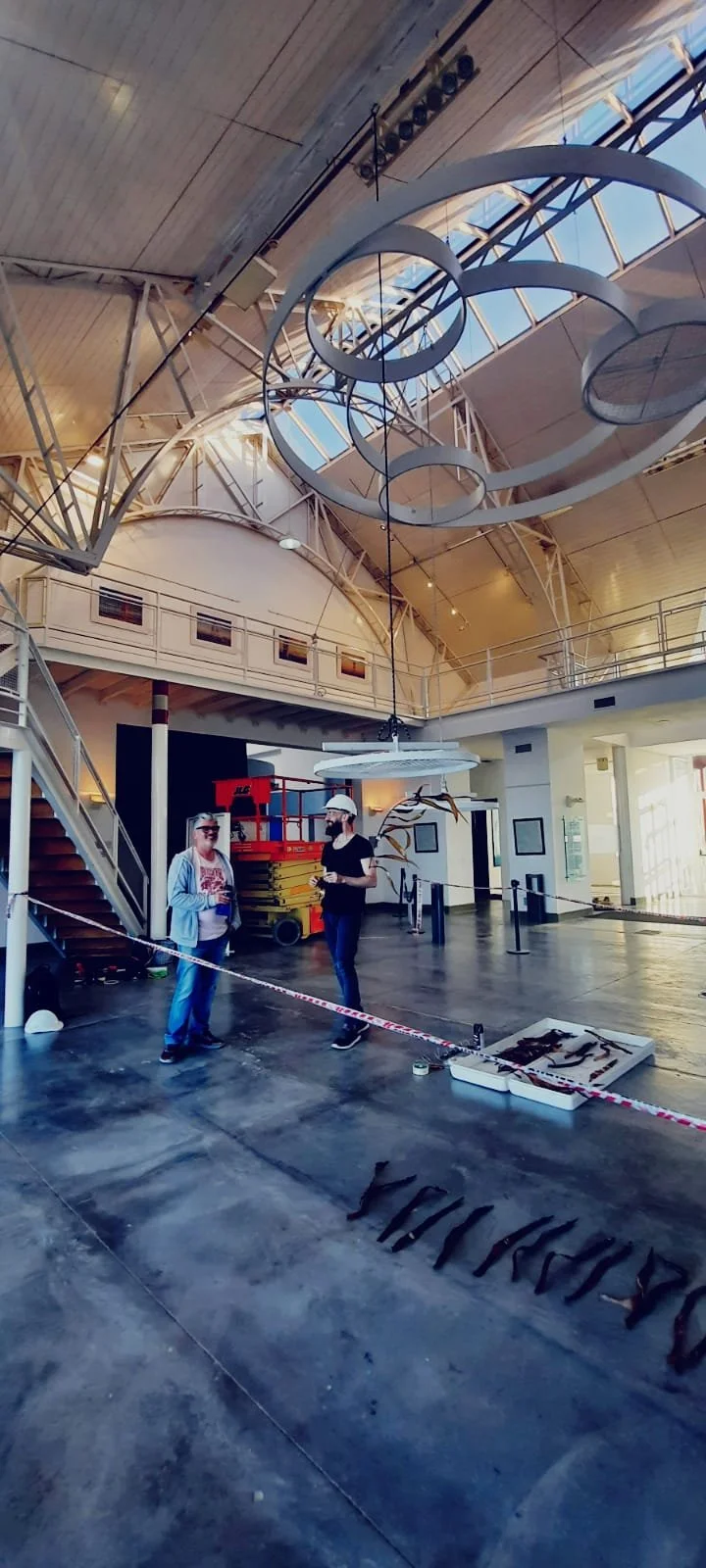
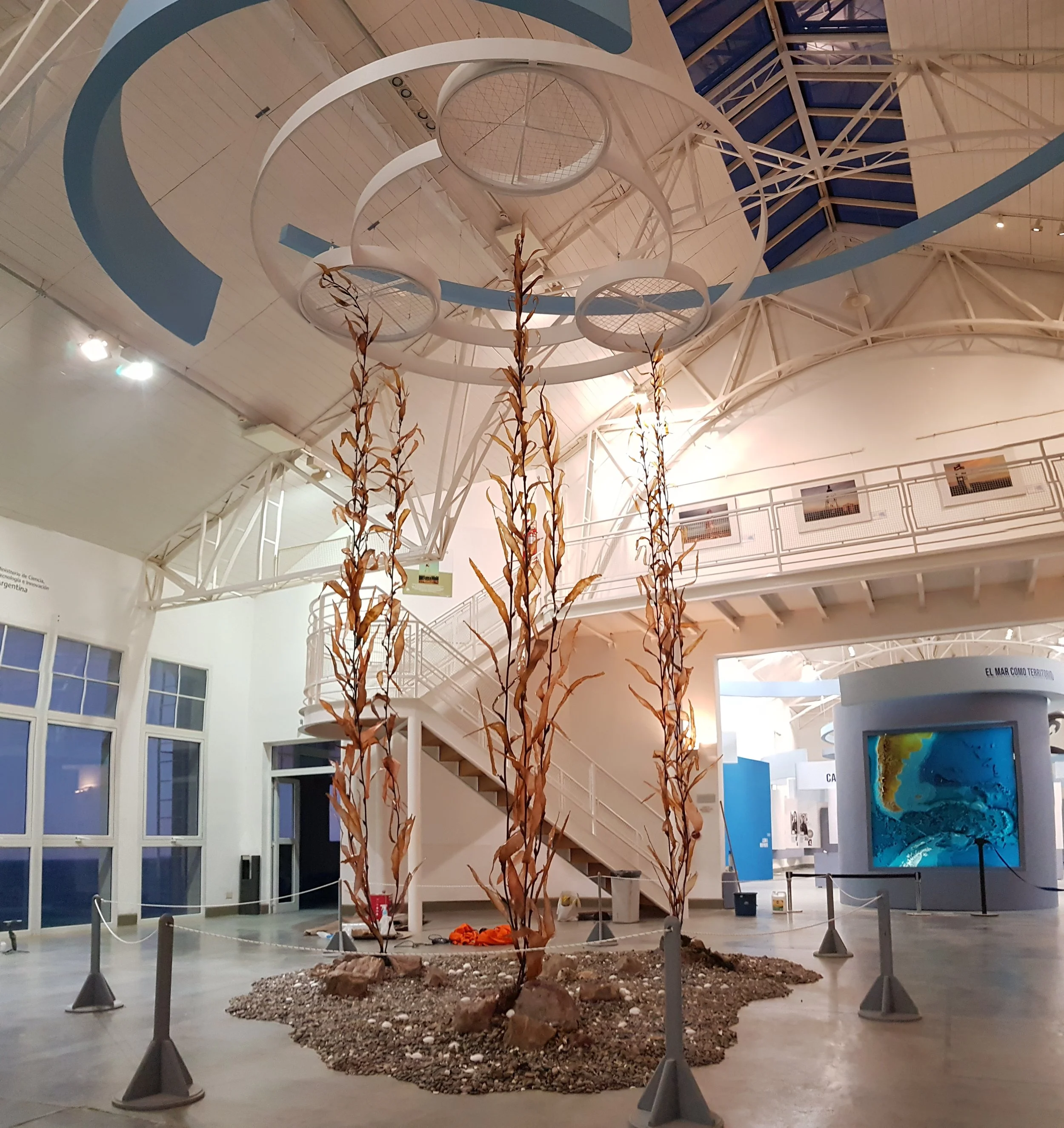
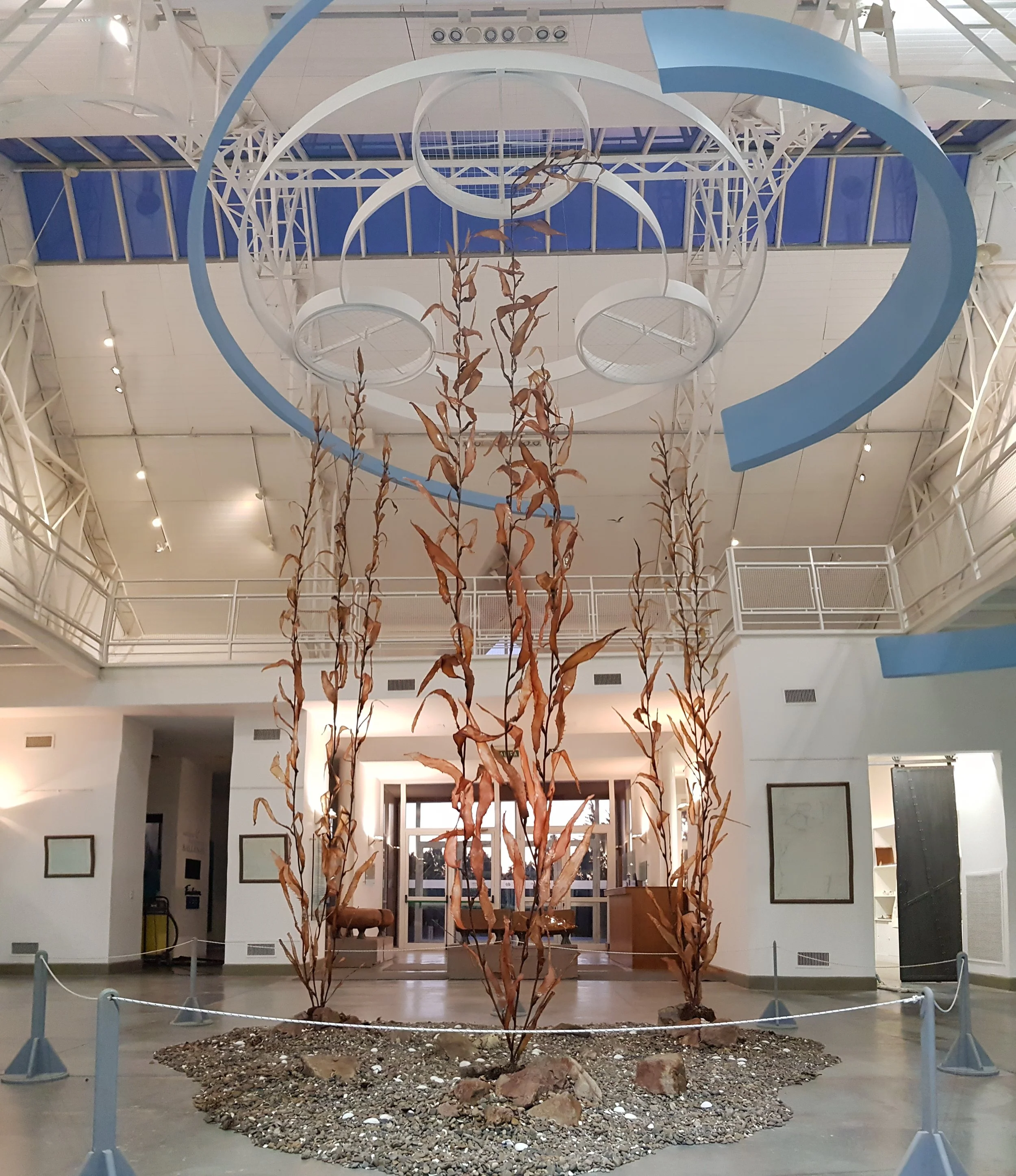
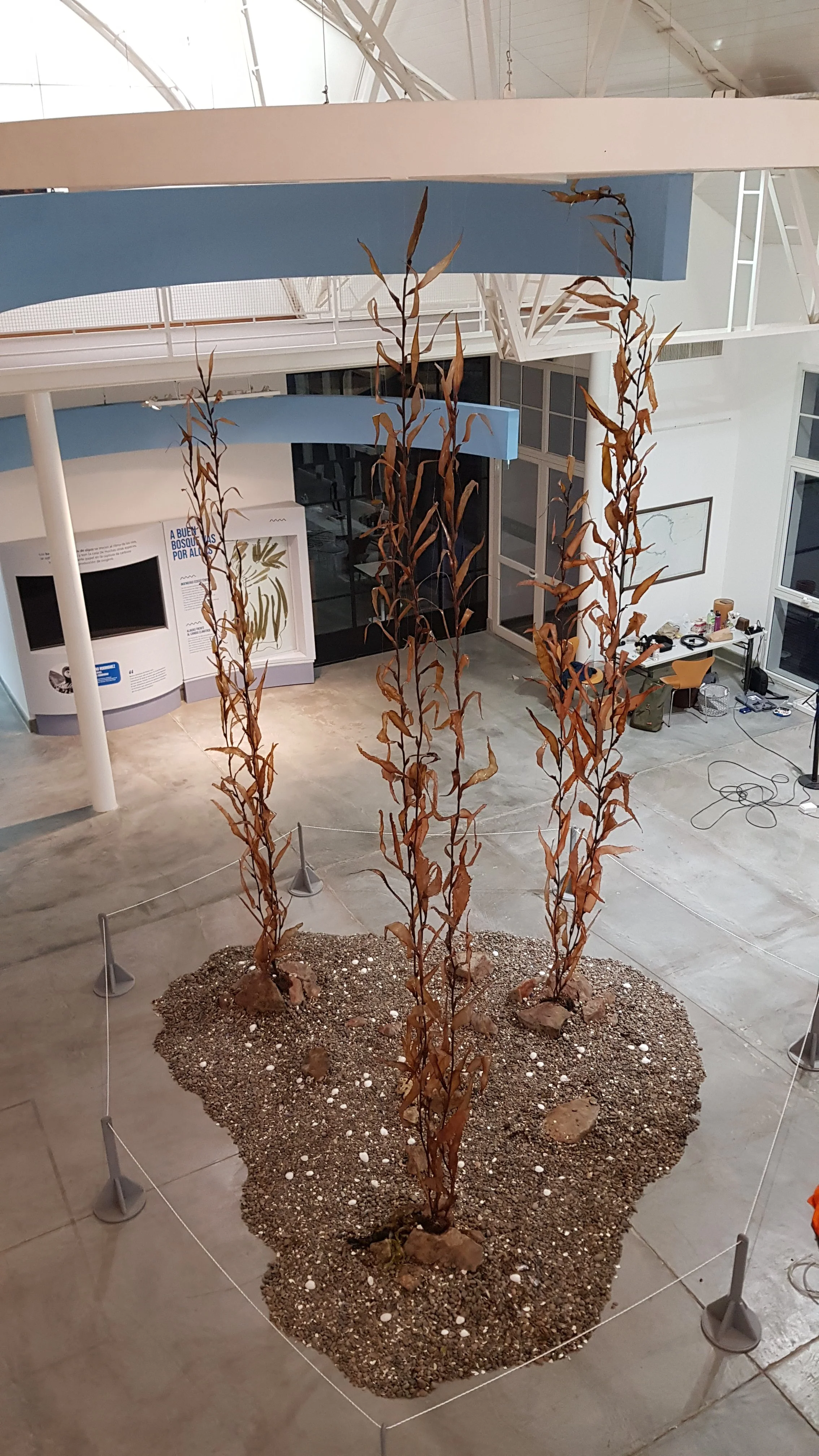
This question guided my material approach to an artistic-scientific installation inspired by Patagonia’s giant kelp forests. The work comprises three six-metre-tall sculptures, each featuring more than 200 individual sheets.
I was invited to develop an alternative to conventional petroleum-based plastics. My objective was to make the greatest possible proportion of the sculptures from bio-based, biodegradable materials, considering the artwork’s life cycle from the outset.
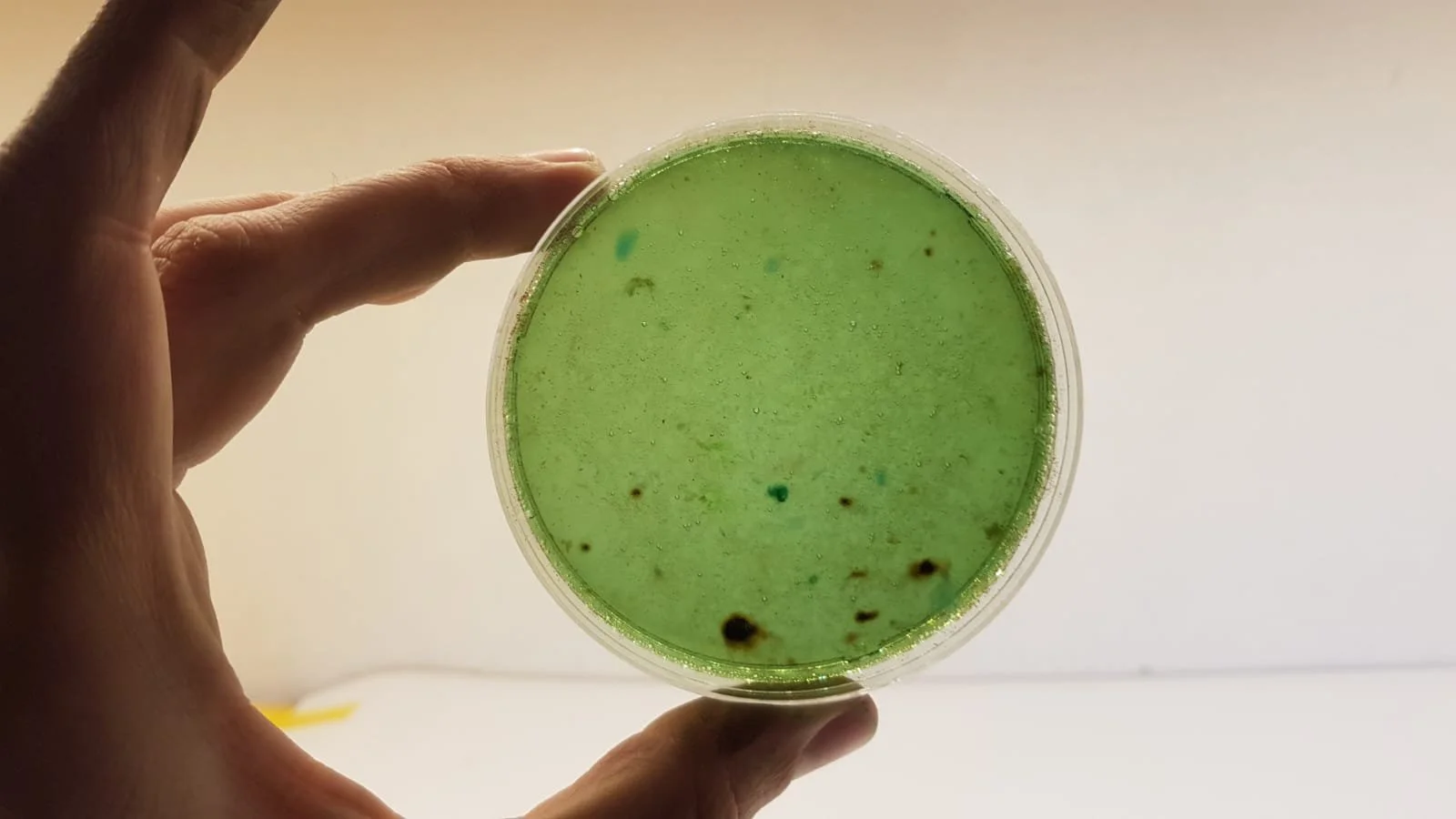
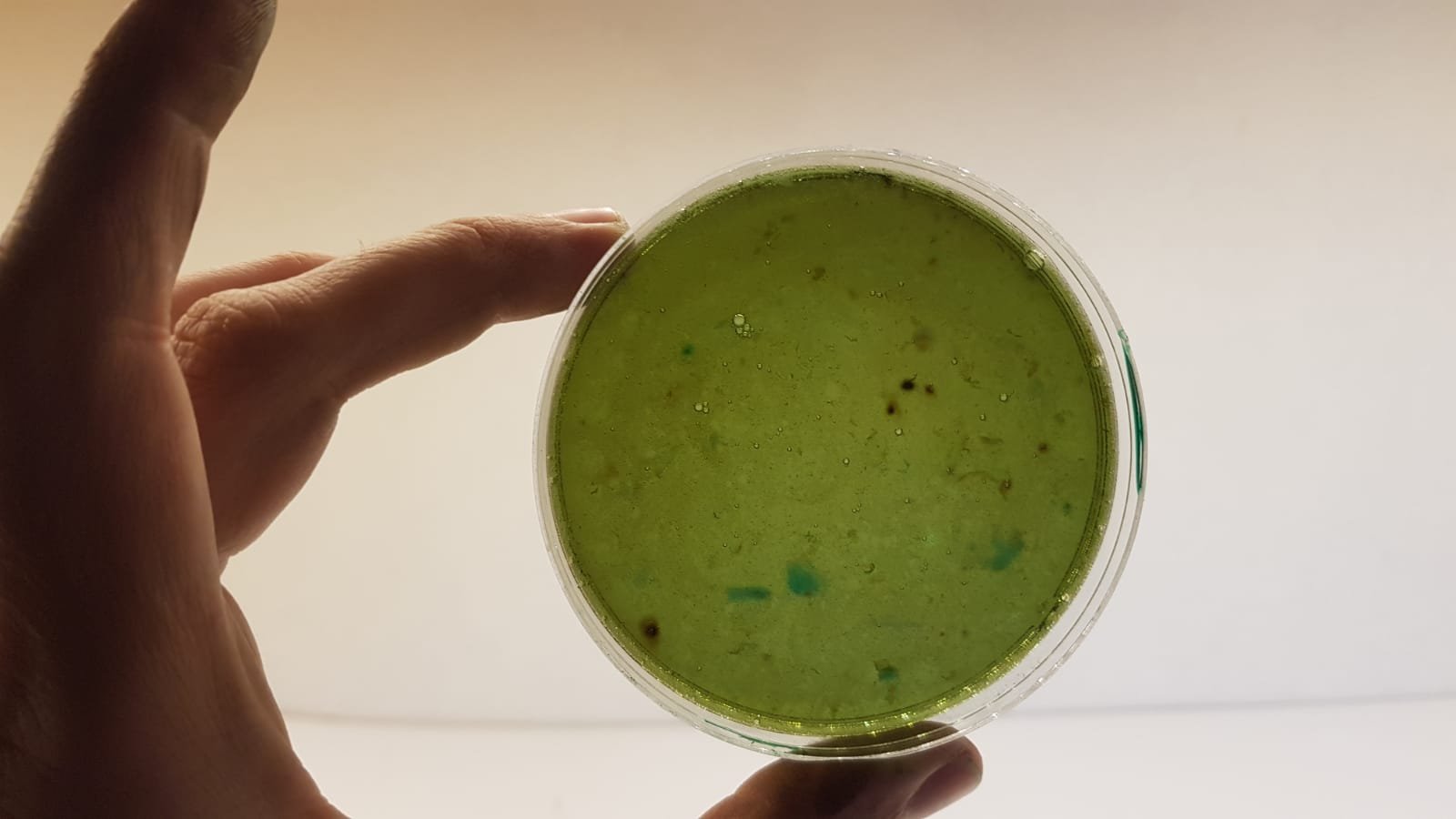
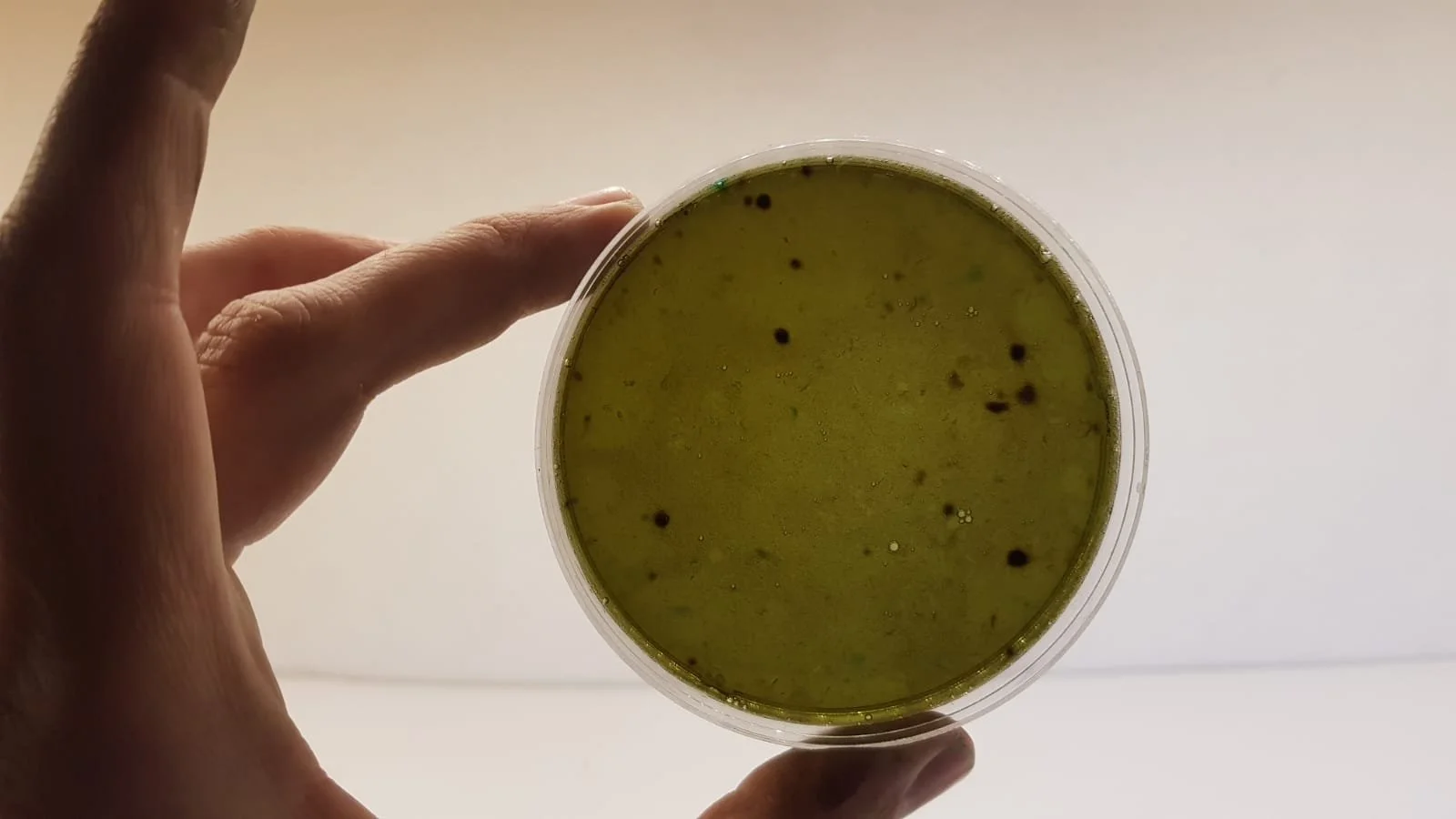
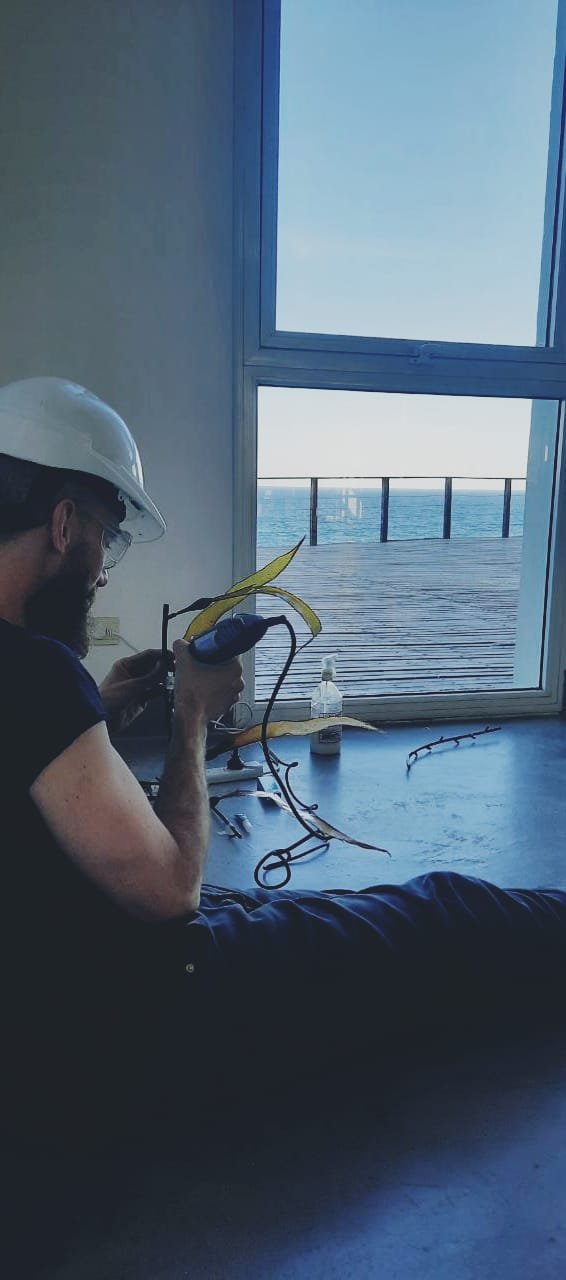
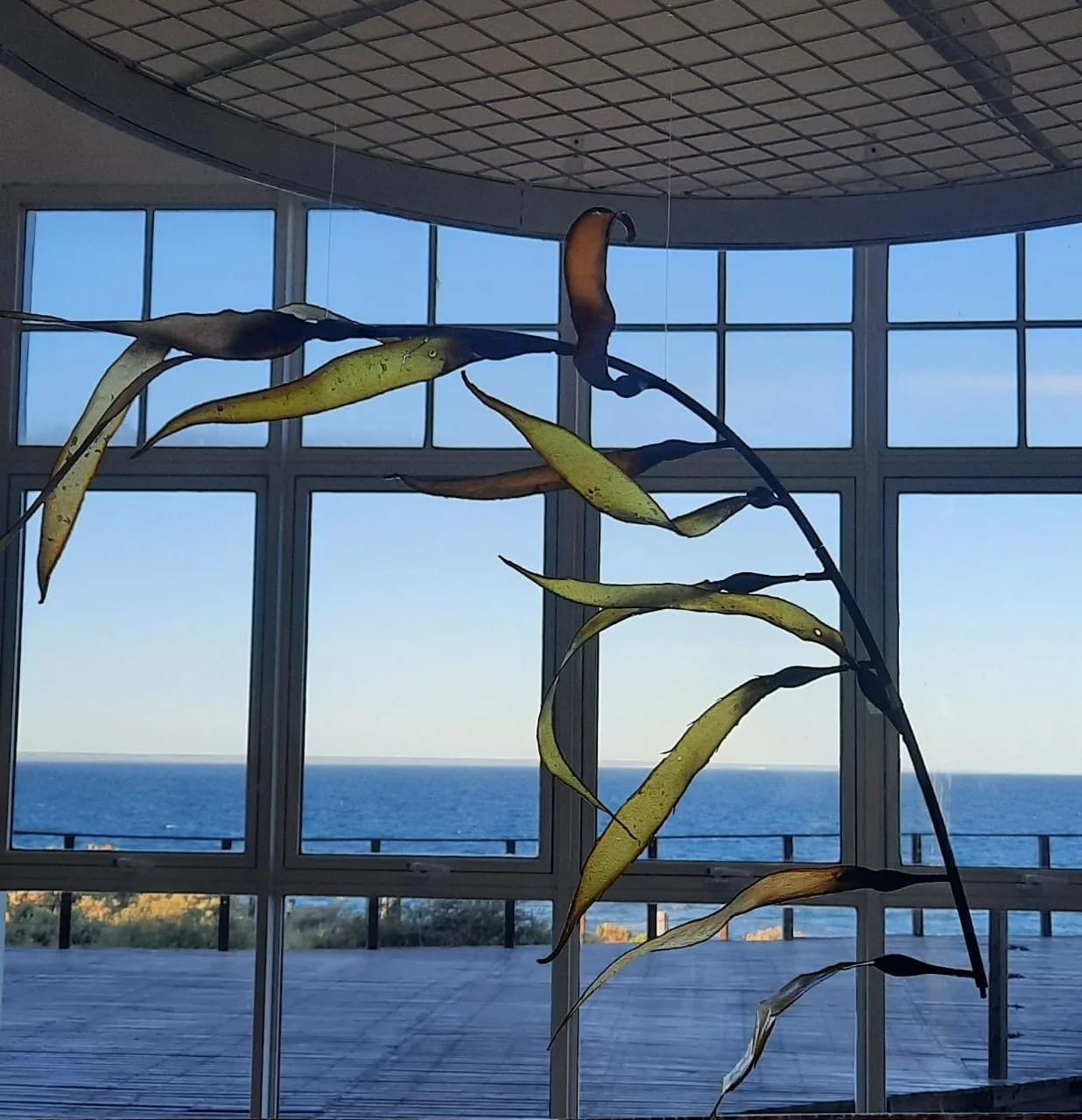
The sheets were made from an agar-based bioplastic. Material formulation, pigmentation trials and iterative fabrication were central to translating this experimental material into a large-scale, permanent installation. My contribution also included developing and fabricating 3D-printed components.
The project explores circular art: an approach in which artistic expression, material choices and responsibility for an artwork’s eventual transformation are considered together. Permanence describes the installation’s intended use, while life-cycle thinking asks what happens to its materials when that use ends.
Rather than claiming that the entire installation is biodegradable, the work demonstrates an effort to maximise bio-based, biodegradable content while addressing the demands of fabrication, scale and display.
Rooted in Patagonia’s coastal landscape, the installation connects art, science and sustainable design through both its representation of marine life and the materials chosen to give it form.
My role: material research, agar-based bioplastic development, fabrication of sculptural sheets, and development and fabrication of 3D-printed components within a collaborative installation project.